Leadership & Leadership Development
Influencing People and Outcomes
Effective leaders are highly sought in all organisations. Effective leaders set direction, envision and create the future, empower others, organise and rally followers towards a goal or a cause. Do you aspire to lead others? Find out what skills you will need to influence others.
High EPL, high EL, high PL and high L score highly in this career type. High Ls have the motivation for only one set of broad skills and may lack the motivation to develop deep expertise in a profession. To be more T-shaped, high Es, high Ps, high EPs or low EPLs could consider learning more about leadership and develop competencies and skills associated with effective leadership.
What Is Leadership?
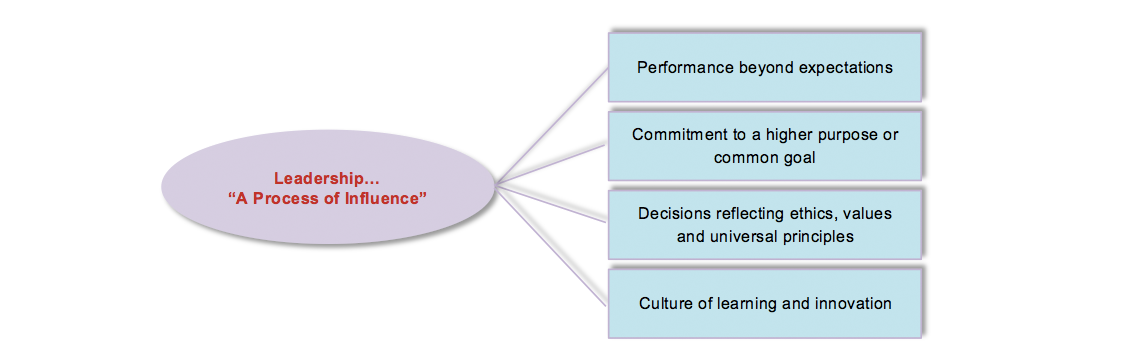
In the EPL framework, it refers to your desire to take the initiative to organise and influence others towards a goal. It is about influencing people towards a purpose by providing direction, building alignment and commitment. Leadership is best defined as a “process of influence” and it is not the same as leadership from the “person-centered” or “leader-centered” perspective where the focus is on the leader or the position that the leader holds.
Asking Why You Want to Lead is Important
It is important to ask yourself this question and attempt to answer it. Leadership is hard work and knowing why you want to lead helps. Be clear about whether you are leading to serve others or leading so you can gain fame and reputation (i.e., serve yourself). It is about leading based on your personal beliefs and values.
When you truly understand what leadership is, you will also realise that there are “substitutes” to leadership and these can take the forms of “job positions” and well as “authority” and “power” that comes with a title. Through these substitutes to leadership, you can achieve outcomes but not necessarily the desirable leadership outcomes.
Desired Outcomes of Leadership
When we think of leadership as an influence process, we need to think of the desired outcomes in terms of what difference we want to make. Desired leadership outcomes include:
Intelligence Quotient (IQ) & Personality Traits for Leader Potential
Are leaders usually more intelligent than most others? Is it important for leaders to have high IQs and cognitive skills? Do leaders have certain personality traits that make them more effective? These are typical questions about leadership.
Most organisations have a selection system that identify leaders based on their intelligence (IQ) as well as other leadership competencies. IQ tests, personality tests or assessment centres are implemented for this purpose. However, most organisational selection systems generally aim to identify young or inexperienced leaders for their “leader potential” more than for “leadership effectiveness”, which are not proven at the time of selection and recruitment. On the other hand, mid-career and executive leaders are selected and recruited based on their previous achievements, relevant experiences and good reputation.
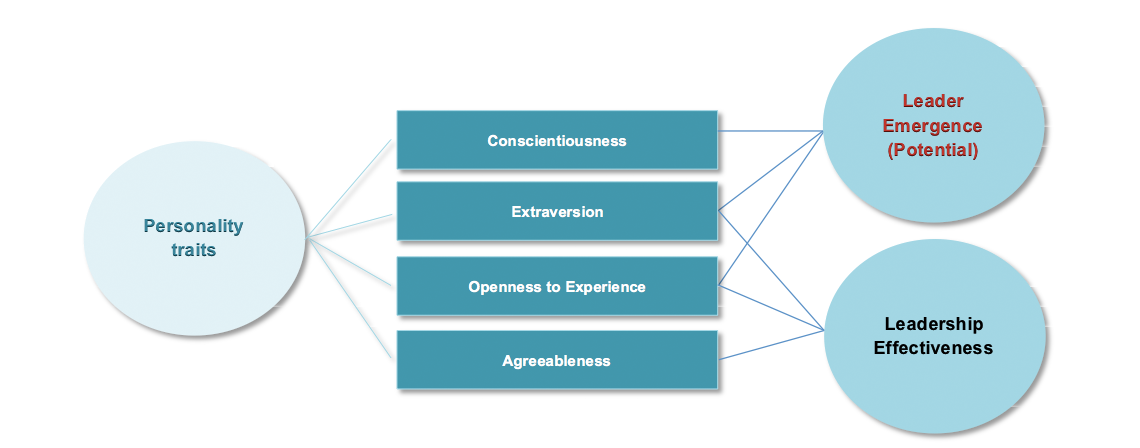
Personality traits like conscientiousness, extraversion and openness to experience predict leader potential. If you have these traits, you can appear to be a more “leader-like” (i.e., you are perceived more like a leader), compared to others who score lower on such traits. Take a personality test to find out if you have the natural tendencies to lead. Check the following websites for free Big-5 personality tests conducted by researchers and to receive a free feedback:
Personality Traits & Leadership Effectiveness
Based on the Big-5 theory and research, personality traits not only predict leader potential but also to how leaders perform. The traits that are most associated with general leadership effectiveness are:
- Extraversion
- Openness to Experience
- Conscientiousness
In general, these traits predict whether you are likely to be an effective leader. However, personality tests are self-reports and are only accurate if you provide honest answers to the questions in the test. While personality tests are useful, there are also other aspects to leading effectively. One can be highly intelligent and have the right leadership traits but may still not become an effective leader. Read on to find out more.
Character, Personal Values and Ethics
These are individual factors associated with leading effectively. You can develop yourself to be:
- An ethical leader – always take an ethical perspective when making a leadership decisions
- An authentic leader - lead by knowing who you are and the values you truly believe in, or
- A values-based leader – lead based on the personal and organisational values you believe and uphold.
You can begin by clarifying your personal values and what you truly believe in. Your personal values may be the reasons why you want to lead
Cognitive Skills
Leaders can learn cognitive skills that are important for dealing with the complexities of the future workplace. Researchers have identified the following skills that leaders should develop:
- Creative problem solving skills for novel and ill-defined problems
- Social judgement skills for successful implementation of solutions within a social context (e.g., “social perceptiveness” is an important enabling skill)
- Knowledge, which includes knowledge of tasks, of organization or context and social networks as well as conceptual and experiential knowledge.
Leadership Styles
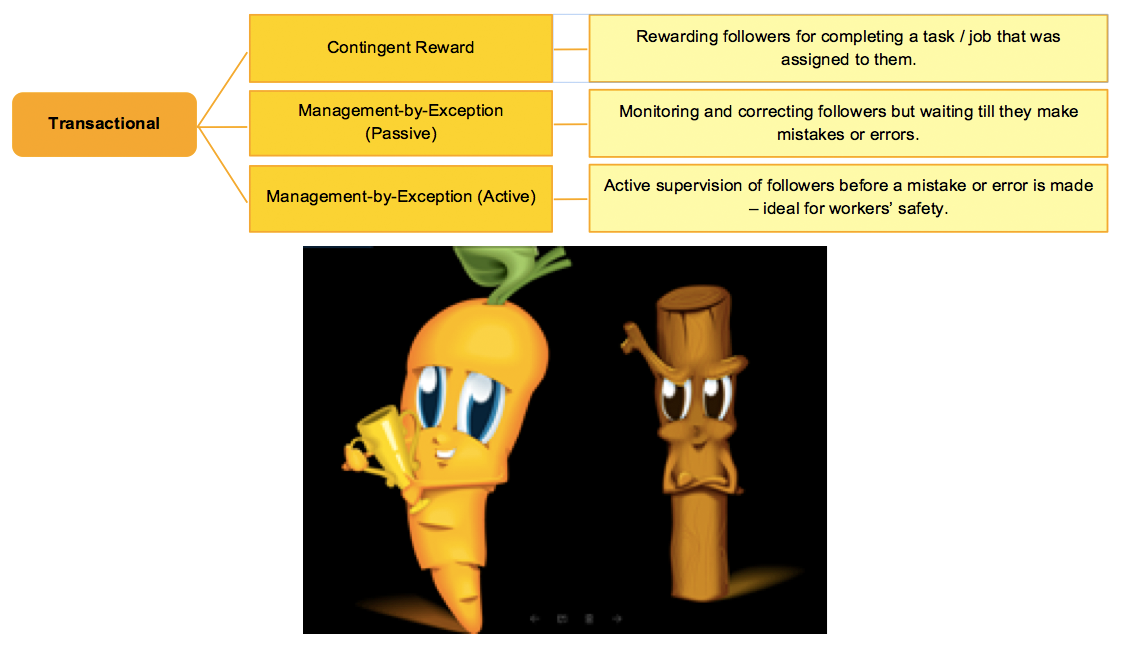
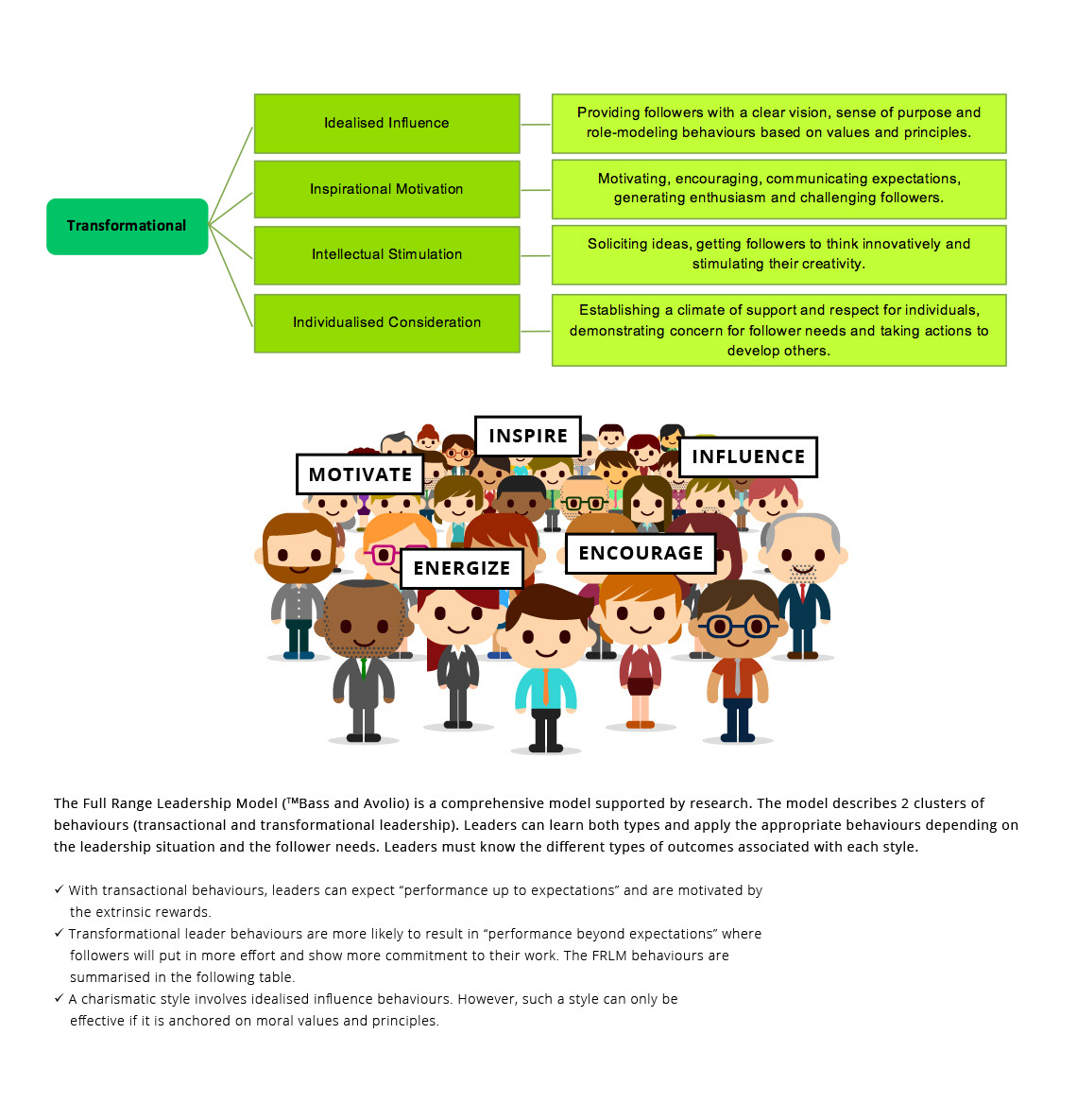
Leadership styles are essentially about a “pattern of leader behaviours” which can be a result of one’s personality as well as what was learnt (e.g., from leader role-models). It is important to vary your leadership styles according to the situational demands in order to bring about the desired leadership outcomes. There are many style theories one can read about in the academic literature but for the purposes of your career development, you might start with the ideas of effective transactional versus transformational leadership styles which are different from the ineffective laissez-faire leadership or non-leadership styles where the leaders do nothing to influence positive outcomes.
Leading in the Future World of Work
Leading in a future is exciting and yet daunting if you are unprepared and fail to understand the future context of work and life. The above diagram presents 4 different aspects of the future of work and what it means for leaders. Future leaders will need to pay even more attention to the human aspects of getting work done. Leadership becomes even more important in a world where technology drives everything around us. The leadership process becomes indispensable so long as there is the need for values, ethics and what makes us humans.
Leadership Development (LD)
What Leadership Development Involves
Knowledge about leadership (the content) is not the same as knowledge about leadership development. LD involves developmental and learning processes and refers to the methods, tools and processes that enable leaders to learn and develop.

- Methods include educational, learning, instructional or developmental approaches that are effective for leadership development. For e.g., movie clips and case studies are often used as stimulus material to discuss leadership concepts and they are ideal for learning emotional content (i.e., the affective domains like values and morals). Experiential activities like outdoor or indoor games that involve problem-solving processes are conducted for participants to reflect and learn various leadership processes like how to get members to collaborate in a team etc. Lectures (intellect and cognition) are used to impart knowledge (e.g., theories about leadership).
- Tools include self-awareness instruments like personality tests, peer assessments or 360-degree feedback.
- Processes refer to learning processes like the Kolb’s Experiential Learning Cycle, after action reviews, vision building, team building, team development or team learning.
Motivation to Lead (MTL)
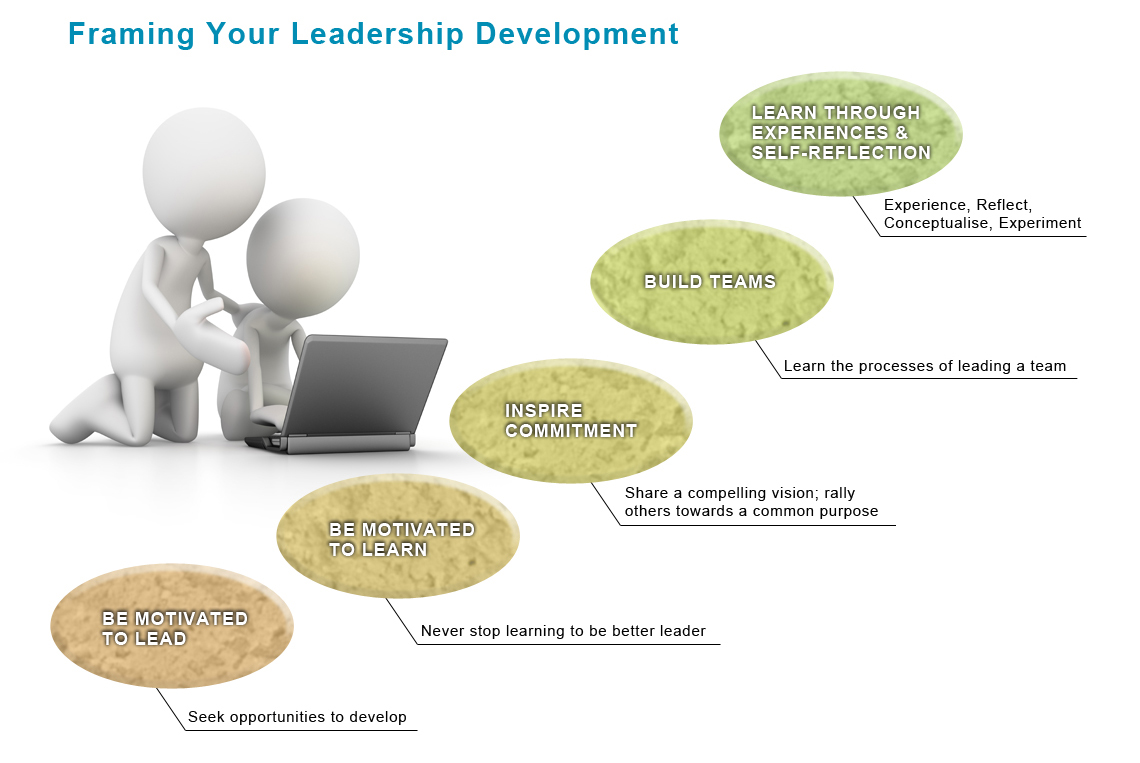
Research by Chan et. al (2001) shows that those who are motivated to lead are those who seek opportunities to develop themselves to be better leaders. If you aspire to lead, look out for opportunities within your institute to develop yourself as early as possible.
Willingness to Learn
You become a better leader if you are also willing to learn. It is said that leaders stop leading when they stop learning.
Leaders Learn Best Through Experiences and Self-Reflection
Based on Kolb’s learning cycle, you need to have concrete experience, engage in reflective observation, conceptualise (think about what you learnt) and experiment (try out what you have learnt).
Leaders Inspire Commitment
You can inspire commitment if you involve with your peers and followers in a shared visioning process. You can provide direction and rally them towards a common goal or shared vision. Learn how to create a shared vision with your group. When your peers and followers take part in the process, they are more likely to be committed to achieving the shared vision and goals.
Effective Leaders Build Teams
Effective leaders set clear goals, establish clear rules, clarify roles and expectations of team members, and create positive relationships based trust and support. When you take up a leadership role, make sure you practice effective behaviours of a team leader.
Self-Awareness is Key to Your LD
Leadership Development Programs in your Institute
Leadership opportunities that provide experience for leadership learning is the best way to develop your leadership. Formal or informal programs offered in your institute can also be useful though not all such programmes may be focused on developing leadership competencies and skills and some may even combine leadership and management topics. Programs that offer leadership techniques and tools are always useful. You can start your LD by enrolling in your faculty/school leadership development programs.
Check out leadership programs like these:
https://www.ccl.org/open-enrollment-programs/
https://www.ccl.org/lead-it-yourself-solutions/facilitation-tools/leadership-explorer-tools/
Student Leadership Development
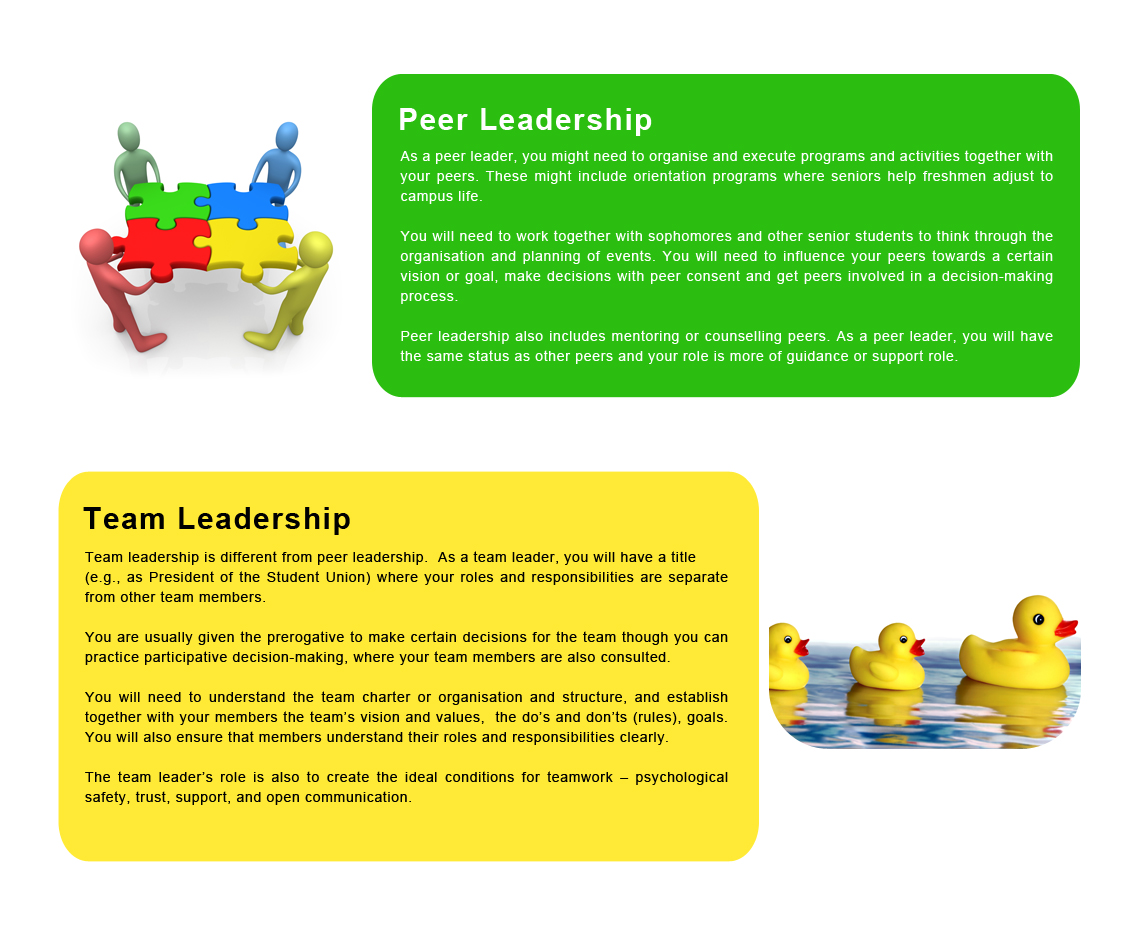
Leadership opportunities that provide experience for leadership learning is the best way to develop your leadership. Formal or informal programs offered in your tertiary institute can also be useful though not all of these LD programs may be focused on developing leadership competencies and skills. Some may offer leadership techniques and tools. You can start your LD by enrolling in your faculty leadership development programs. Or you can volunteer to be a student leader or counsellor. As a student, you may become a peer leader or a team/group leader. It is useful to know how to prepare yourself for either context.
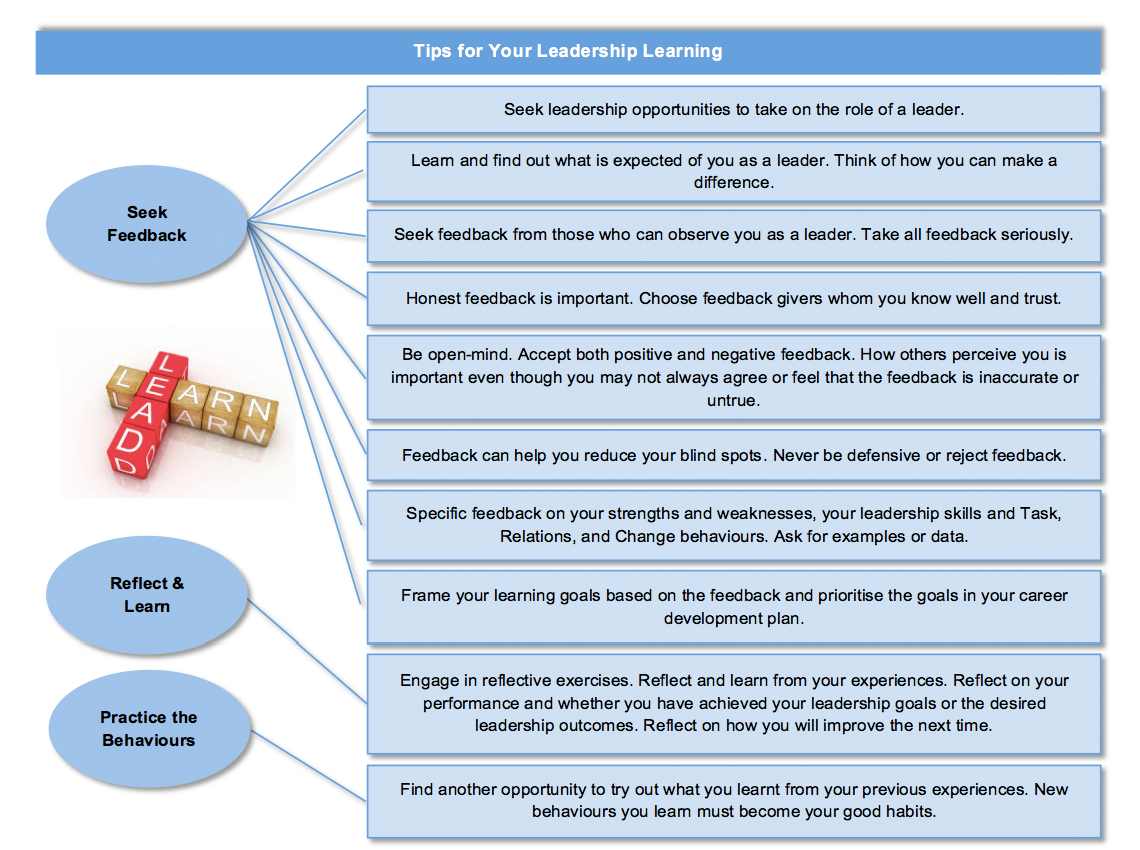
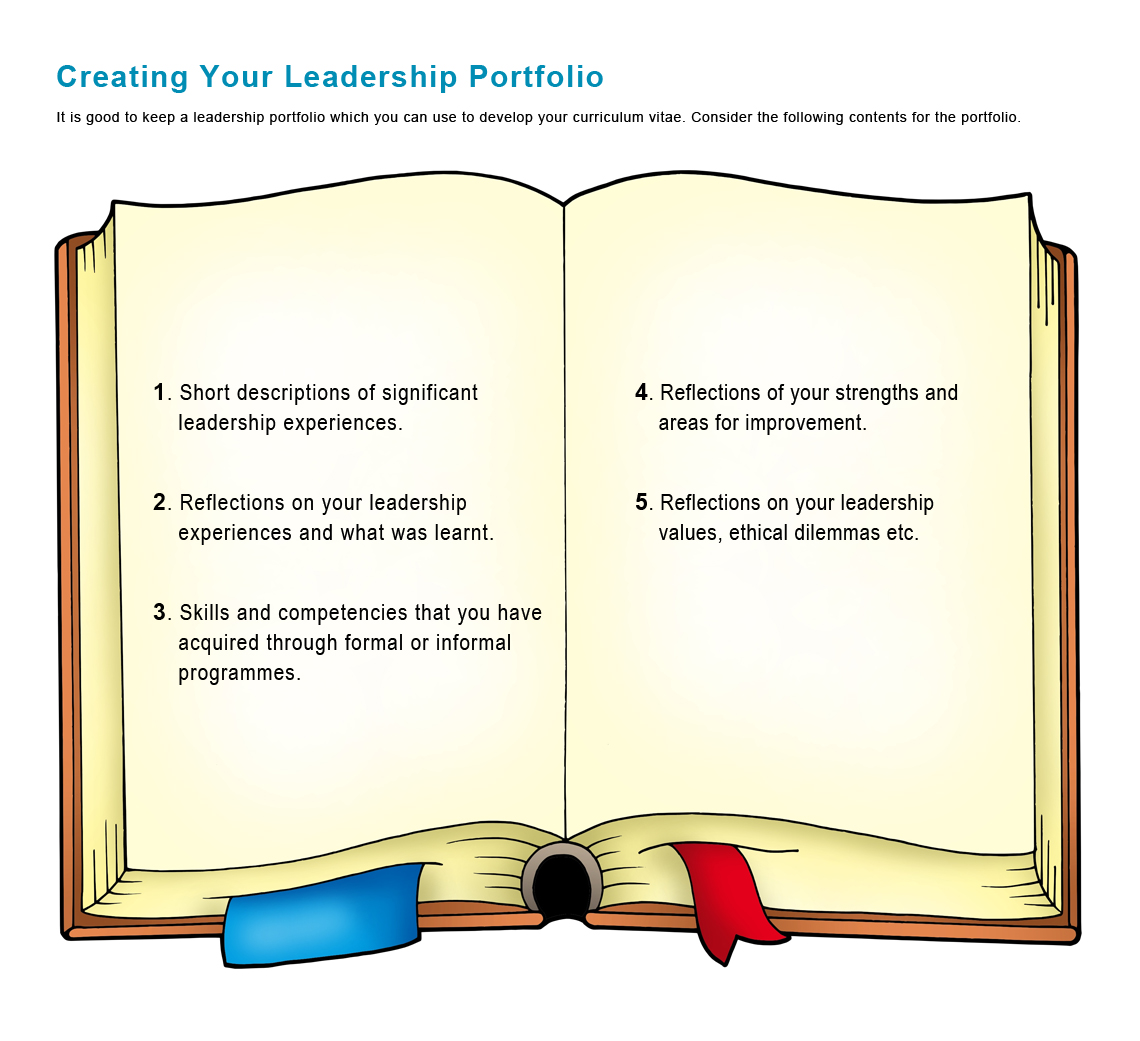
Your Continual Development as a Leader
- As a leader, you never stop learning. Pay attention to developing your self-awareness. Continue to ask others for feedback. Some organisations have 360-degree feedback systems to help leaders become more self-aware.
- Engaging a leadership coach can help you grow as a leader.
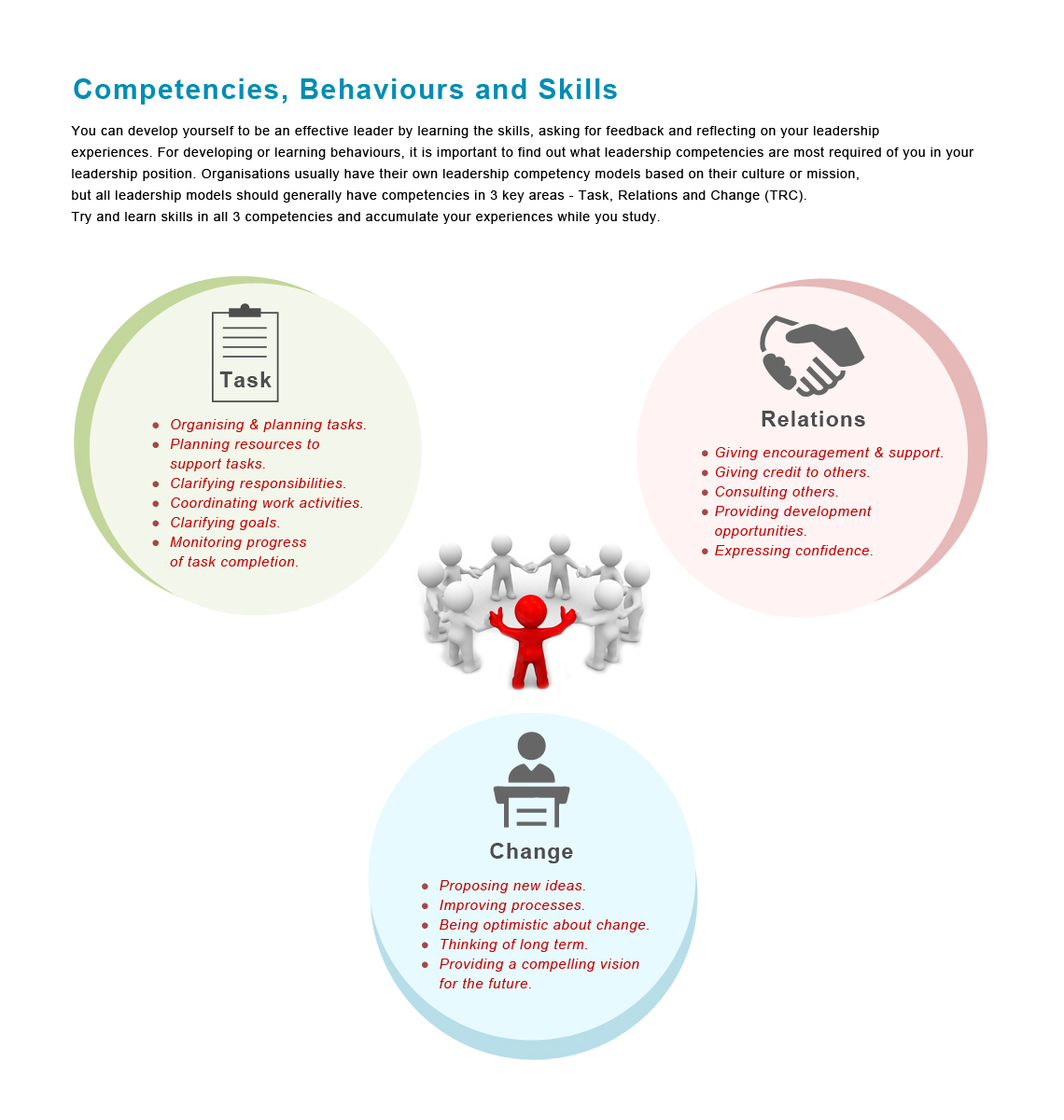
- When you lead small teams and or work in project groups where you share leadership with others, your influence can also depend on your professional competence (task-related), your relationships and your change-related behaviours. Learn and develop yourself in all 3 areas (Task, Relations and Change skills) of leadership.
- When you become an organisational leader, you need to learn how to develop others (e.g., your followers) as well as your organisation.
- Attend a coaching program and learn how to develop others.
- Attend an organisational development program and learn how to develop your organization to meet the demands of its external environment.
References
Burns, J. M. (1978). Leadership Harper & Row. New York, 181.
Bass, B. M. (1985). Leadership and performance beyond expectations. Free Press; Collier Macmillan.
Bass, B. M., & Avolio, B. J. (1997). Full range leadership development: Manual for the Multifactor Leadership Questionnaire (pp. 43-44). Palo Alto, CA: Mind Garden.
Avolio, B. J., & Gardner, W. L. (2005). Authentic leadership development: Getting to the root of positive forms of leadership. The Leadership Quarterly, 16(3), 315-338.
Chan, K. Y., & Drasgow, F. (2001). Toward a theory of individual differences and leadership: understanding the motivation to lead. Journal of Applied Psychology, 86(3), 481.
Chan, K. Y., Ramaya, R., & Soh, S. (2011). Military Leadership in the 21st Century: Science and Practice. Cengage Learning.
Daudelin, M. W. (1997). Learning from experience through reflection. Organisational Dynamics, 24(3), 36-48.
Day, D. V. (2001). Leadership development: A review in context. The Leadership Quarterly, 11(4), 581-613.
Inyang, B. J. (2013). Exploring the concept of leadership derailment: Defining new research agenda. International Journal of Business and Management, 8(16), 78.
Judge, T. A., Bono, J. E., Ilies, R., & Gerhardt, M. W. (2002). Personality and leadership: a qualitative and quantitative review. Journal of Applied Psychology, 87(4), 765.
Judge, T. A., Colbert, A. E., & Ilies, R. (2004). Intelligence and leadership: a quantitative review and test of theoretical propositions. Journal of Applied Psychology, 89(3), 542.
Kolb, D. A. (2014). Experiential learning: Experience as the source of learning and development. FT press.
Maitland, A., & Thomson, P. (2014). Leaders for the new world of work. In Future Work (pp. 80-98). Palgrave Macmillan UK.
Mumford, M. D., Zaccaro, S. J., Harding, F. D., Jacobs, T. O., & Fleishman, E. A. (2000). Leadership skills for a changing world: Solving complex social problems. The Leadership Quarterly, 11(1), 11-35.
Yukl, G. (1999). An evaluative essay on current conceptions of effective leadership. European Journal of Work and Organizational Psychology, 8(1), 33-48.